
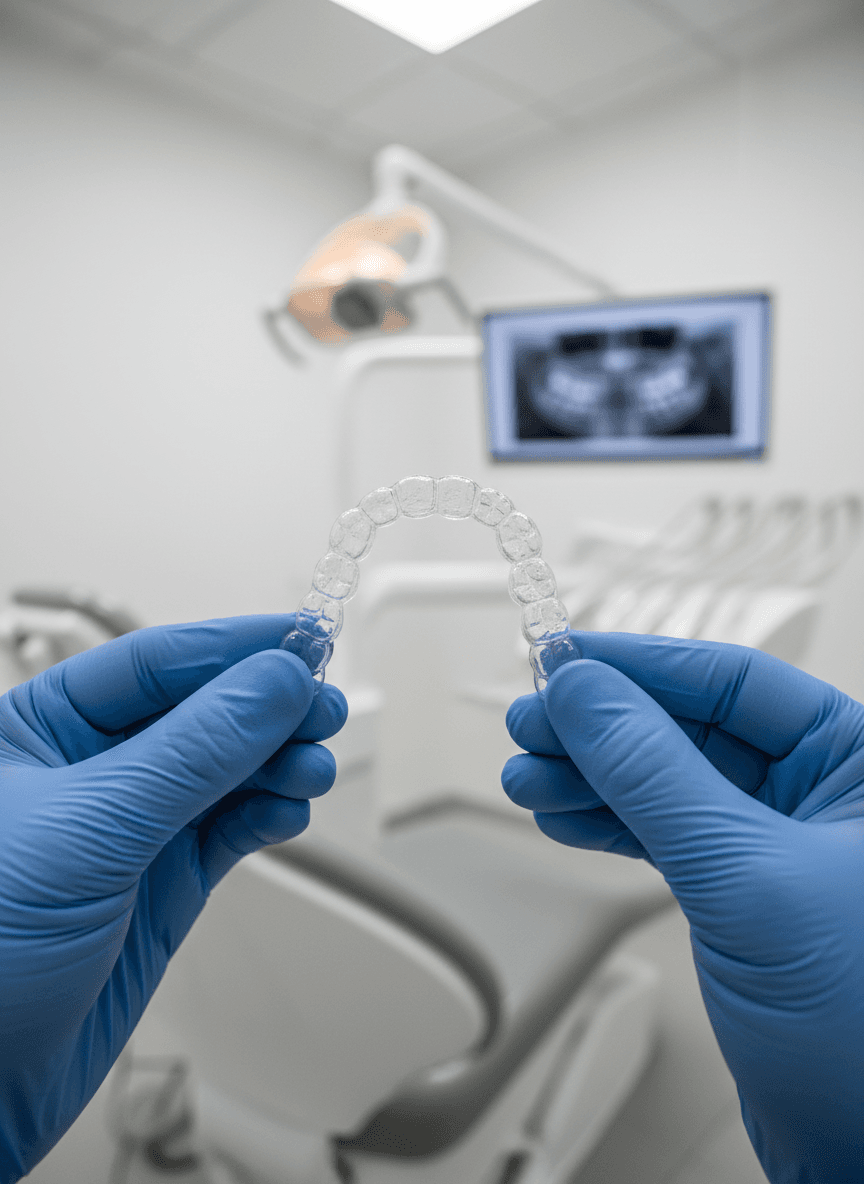
One of the best things about clear aligners is that there's no list of forbidden foods. You take your trays out, eat what you like, clean up and put them back. The catch is that taking them out has to happen every single time — and that changes how you snack and sip during the day.
The basic rule
Wear your aligners 20 to 22 hours a day and take them out for everything except plain water. Food and drinks trapped under a tray sit against your teeth for hours, where saliva can't wash them away.
Drinks
| Drink | Trays in? | Why |
|---|---|---|
| Plain water, cool or room temperature | Yes | Safe for teeth and trays |
| Unflavored sparkling water | Better out | Carbonation is mildly acidic |
| Coffee and hot tea | No | Heat can warp trays, and both stain |
| Sweet tea, soda, juice, sports drinks | No | Sugar and acid get trapped against enamel |
| Wine and beer | No | Stain the trays and carry sugar |
Sweet tea deserves a special mention in Oklahoma. It feels harmless, but sipping it with trays in bathes your teeth in sugar for as long as the tray stays on. Drink it with your trays out, then rinse.
Coffee without the hassle
- Drink your coffee in one sitting rather than sipping for an hour.
- Take the trays out, finish your cup, rinse your mouth with water and put them back in.
- Brush before reinserting if you can; at minimum, rinse well.
Meals and snacks
With the trays out you can eat normally, including foods braces patients avoid, like popcorn, corn on the cob and sticky candy. The real adjustment is snacking. Every snack means removing the trays and cleaning up, and those minutes count against your daily wear target. Most patients naturally shift toward regular meals and less grazing — and many find that a welcome side effect.
The after-meal routine
- Remove the trays and put them straight into their case — never in a napkin.
- Eat and drink what you like.
- Brush your teeth, or at least rinse thoroughly with water.
- Rinse the trays in cool or lukewarm water.
- Put them back in.
Eating out, road trips and the Oklahoma heat
Keep a small kit in your bag: aligner case, travel toothbrush, mini toothpaste and floss. At a restaurant, step away to remove your trays before the food arrives. On game days and road trips, plan your meal stops so you're not tempted to leave the trays out all afternoon. And never leave aligners in a parked car during an Oklahoma summer — the heat inside can warp the plastic.
The first few days of each tray
New aligners can make teeth tender for a day or two. Softer foods like eggs, yogurt, soup and pasta make those days easier, and the tenderness fades as your teeth settle into each new set.
Thinking about aligners?
Your provider can give you tips tailored to your treatment. If you're considering clear aligners, an Infinity Aligner certified provider in Oklahoma can walk you through what daily life looks like before you start.
Infinity Aligner OKC
Ready to get started?
Join 50+ certified providers across Oklahoma. Free certification, 10-day turnaround, dedicated clinical support.