
When you research orthodontic treatment, you may come across the term 'root resorption' and wonder how worried you should be. It's a real risk that every provider monitors for, but it's important to understand the difference between the common, minor form and the rare, serious one.
What it is
Root resorption is a loss of material from the tip of a tooth's root. During any orthodontic movement, the body remodels bone around the roots. Sometimes it also removes a small amount of root surface. In most patients this is minimal — a slight rounding of the root tip that has no effect on the tooth's health or lifespan.
How common is it?
Minor root shortening is common in orthodontic patients and usually goes unnoticed. Severe resorption, where a significant part of the root is lost, is uncommon. When it does occur, it most often affects the upper front teeth.
Who is at higher risk
- Treatment that lasts a long time or involves large movements of the roots
- Teeth that were injured in the past
- Roots that are naturally short, thin or unusually shaped
- A personal or family history of root resorption
- Certain movements, such as pushing teeth into the bone or tilting their roots significantly
How providers monitor it
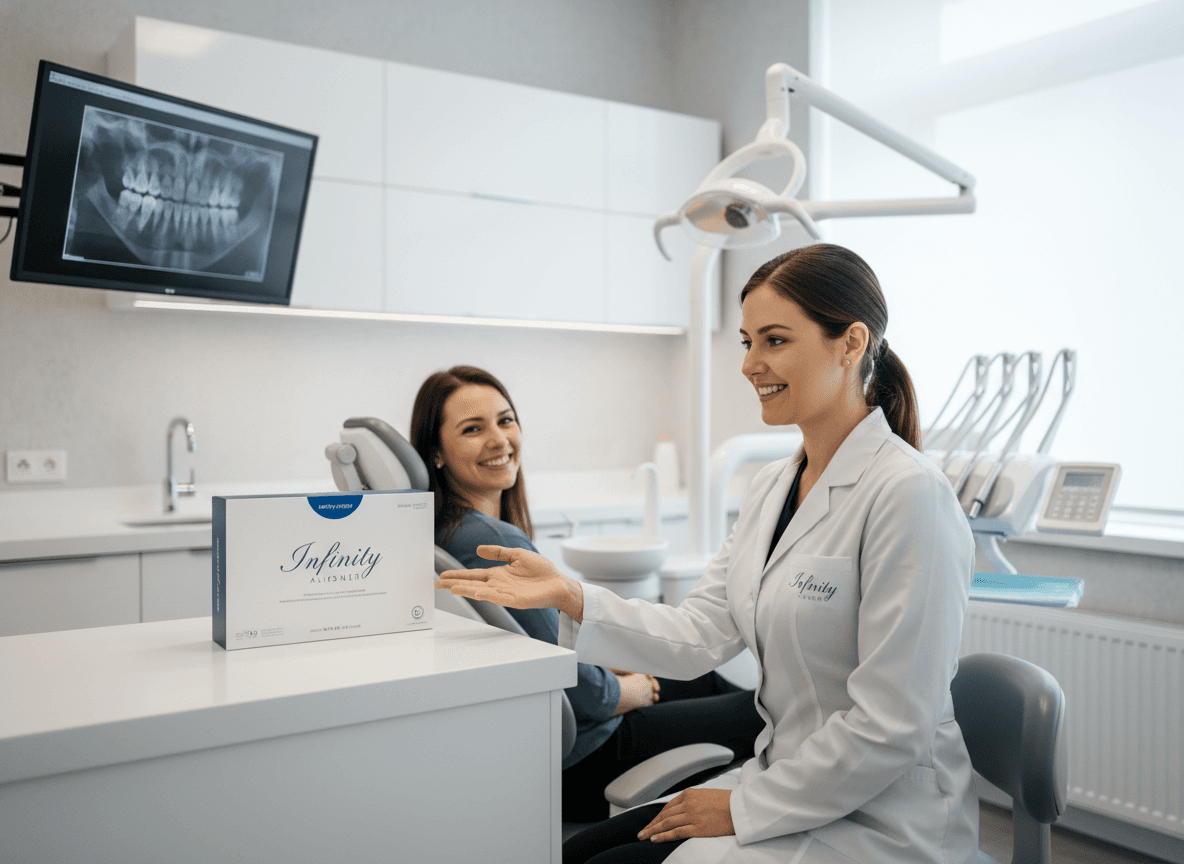
Your provider reviews X-rays before treatment to check root shape and length. If you have risk factors, they may take follow-up X-rays during treatment. If shortening is detected, the plan can be adjusted — for example by pausing movement, reducing forces or changing the treatment goals.
Do clear aligners reduce the risk?
Aligners apply lighter, intermittent forces, and some studies have reported less root resorption with aligners than with fixed braces. That doesn't make the risk zero, and results vary between studies. The biggest factors remain case complexity, treatment length and individual biology.
What you can do
- Tell your provider about any past injuries to your teeth.
- Mention if family members had problems with short roots after braces.
- Keep your check-in appointments so any issue is spotted early.
An Infinity Aligner certified provider will review your X-rays and explain your personal risk before treatment starts.
Infinity Aligner OKC
Ready to get started?
Join 50+ certified providers across Oklahoma. Free certification, 10-day turnaround, dedicated clinical support.