
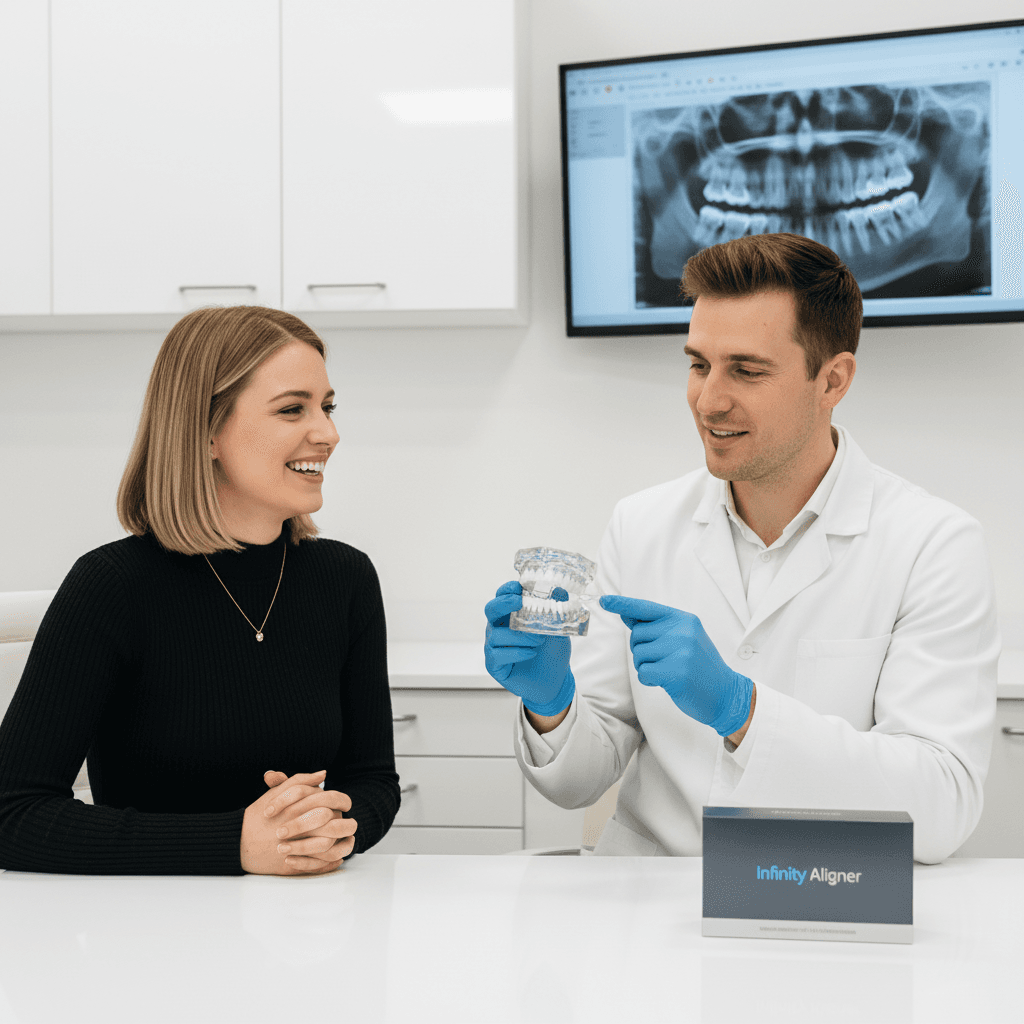
Clear aligners have changed more in the last decade than traditional orthodontics did in several. Some of the next steps are already appearing in practices. Here's a grounded look at the trends most likely to shape aligner treatment in the coming years.
AI-assisted treatment planning
Software already automates parts of planning, such as separating teeth on a scan and proposing initial setups. As these tools improve, planners and clinicians can spend more time on the clinical decisions that matter — case selection, sequencing, anchorage — and less on repetitive steps. Clinical judgment and approval remain essential.
Direct-printed aligners
Printing aligners directly from resin, rather than forming plastic over printed models, allows variable thickness within a single tray and reduces manufacturing steps and waste. Direct-printed aligners have begun reaching the market; wider adoption will depend on clinical results and cost.
Remote monitoring
Apps that let patients photograph or scan their teeth between visits can flag tracking problems early. Used well, they complement in-person care rather than replace it, helping clinicians decide when a patient needs to be seen.
Smarter materials
- Multilayer sheets that deliver more consistent force over each wear cycle
- Materials designed to resist staining and cracking
- Research into shape-memory polymers that respond to body temperature
Faster, closer manufacturing
Regional manufacturing shortens the time between approval and delivery and makes replacements faster. It also keeps communication between clinicians and planners simpler. Infinity Aligner manufactures in Oklahoma City for this reason.
What won't change
- Teeth move at a biologic pace; technology can make movement more efficient, not instant.
- Diagnosis, case selection and supervision by a licensed clinician remain central.
- Retention remains lifelong.
Preparing your practice
Practices that already work digitally — scanning, photographing and communicating through a portal — will find it easiest to adopt what comes next. If you're considering adding aligners, becoming an Infinity Aligner certified provider is a practical starting point.
Infinity Aligner OKC
Ready to get started?
Join 50+ certified providers across Oklahoma. Free certification, 10-day turnaround, dedicated clinical support.