
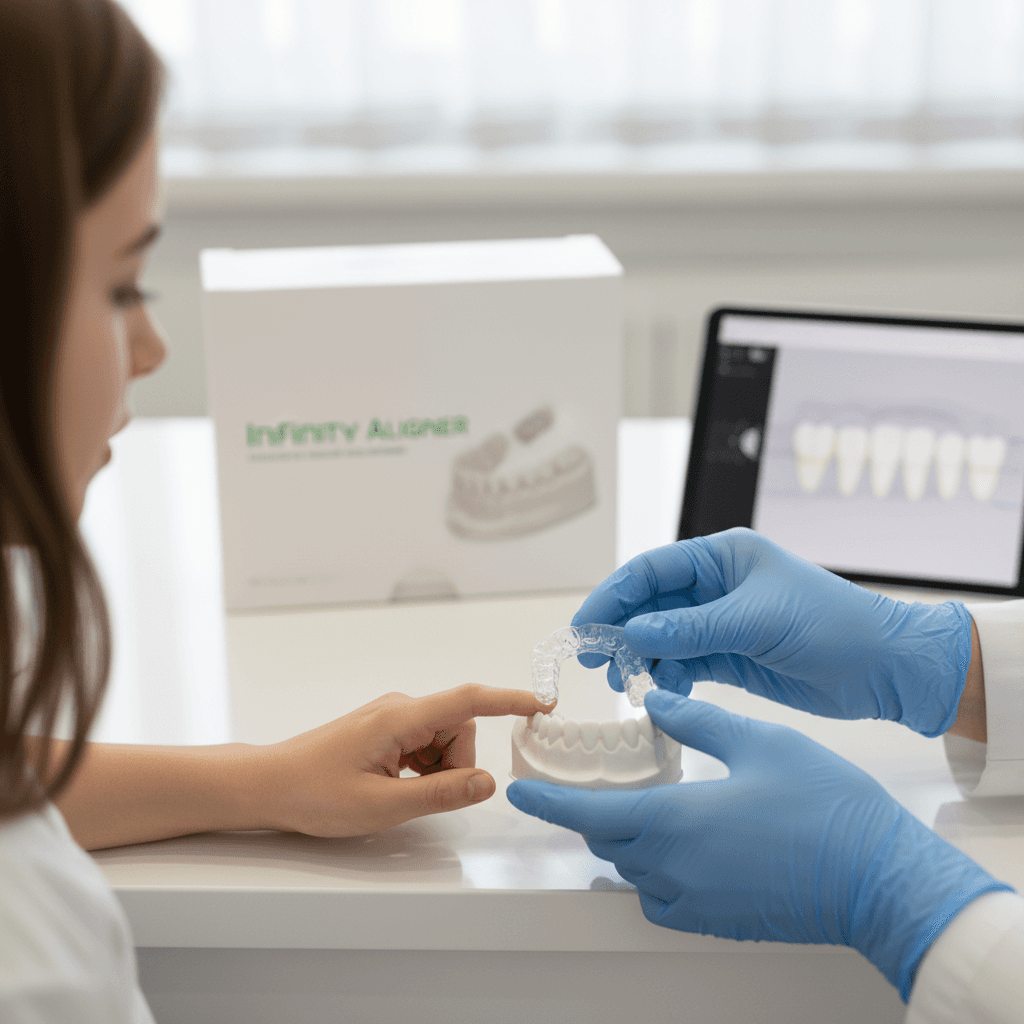
Two aligners made from the same treatment plan can behave differently in the mouth depending on the material and how it's processed. Understanding the basics helps clinicians interpret fit, comfort and tracking issues.
Thermoformed aligners
Most aligners today are thermoformed: a thermoplastic sheet is heated and formed over a 3D-printed model of each treatment stage, then trimmed and polished. The sheet material, its thickness and the forming process all influence the finished tray.
Single-layer materials
Early aligners commonly used single-layer polymers such as PETG or thermoplastic polyurethane. They're clear and practical to form, but a single material has to balance stiffness for force delivery against flexibility for comfort and seating.
Multilayer materials
Multilayer sheets combine layers with different properties, often a softer inner or middle layer with harder outer layers. The goal is more consistent force over the wear period, better comfort on seating and improved resistance to cracking.
Direct-printed aligners
Direct printing produces the aligner itself from a photopolymer resin, skipping the physical model and thermoforming step. It allows variable thickness within one tray and very precise edge design. Direct-printed aligners have begun reaching the market, and clinical experience is still growing compared with thermoformed trays.
Properties that matter clinically
| Property | Clinical effect |
|---|---|
| Thickness | Thicker trays deliver more force but are harder to seat; typical sheets are fractions of a millimeter |
| Stress relaxation | Force decreases over the wear period as the material relaxes |
| Water absorption and temperature | Saliva and body heat change the material's behavior in the mouth |
| Clarity and stain resistance | Affects esthetics and patient satisfaction over each wear cycle |
| Edge design | Trim line height influences retention and gingival comfort |
Processing affects fit
- Model accuracy: printing resolution and model post-curing influence the final shape.
- Forming conditions: heat and pressure consistency determine how closely the sheet adapts.
- Trimming and polishing: smooth, accurate trim lines improve comfort and retention.
- Storage and shipping: heat exposure can distort trays before they reach the patient.
Troubleshooting fit
If a new tray doesn't seat, check whether the previous stage tracked, whether attachments are intact, and whether the tray was exposed to heat. Persistent fit issues across several stages usually point to a tracking problem rather than material failure.
Infinity Aligner trays are manufactured in Oklahoma City. Certified providers can contact our clinical team with material or fit questions on any case.
Infinity Aligner OKC
Ready to get started?
Join 50+ certified providers across Oklahoma. Free certification, 10-day turnaround, dedicated clinical support.